Our Diocese
ACK Garissa Diocese History
The semblance of the church in the region was Christian Chaplaincy. Represented by service to the military outposts and civil servants stationed in the region. The assembled congregations developed into community churches (ecumenical). However, the indigenous population, mainly Muslims and traditionalists, were never evangelised nor did they receive appropriate Christian witness.
The Anglican church’s early endeavours in the region came in the late 1970s and 1980s. These were in the Diocesan Missionary Areas -DMA activities. The DMAs were centrally organised missions which were amorphously operated. Various dioceses within the province chose and engaged various areas, some others partnership of mission agencies like CMS, Church Army, and Cross Links laid the foundation of the church here today. These were the initial attempts made to open up the region for the Church.
The desire to speed up mission work prompted a structural realignment. First, the creation of three overarching Missionary Areas of Garissa, Marsabit and Turkana, introduced under Archbishop Benjamin Nzimbi. The areas had suffragan bishops to enhance ministry plan work according to particular sensitivities, acknowledging the communities and mission work already in place.
Present Status
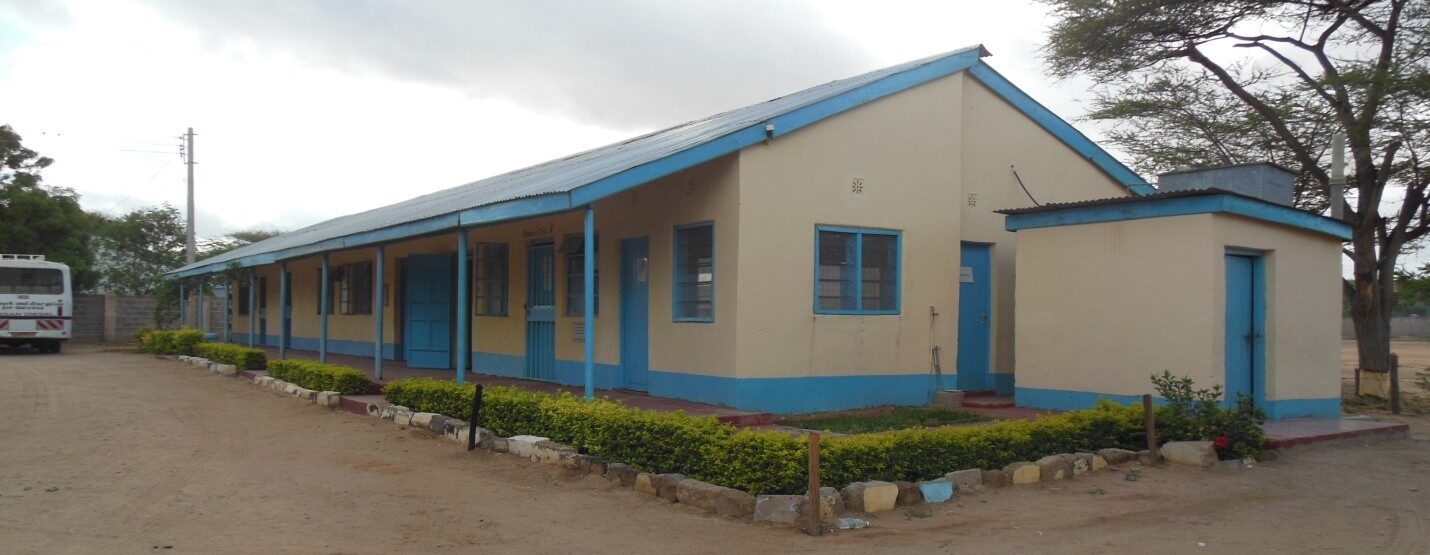
The present Garissa Diocese emerged from the DMA mission order. It covers the geographical counties of Garissa, Wajir and Mandera, including parts of Kitui and Tana River. This region has the lowest number of Christians and churches compared to other dioceses. There have been no known indigenous persons following Christ here. This is the Somali homeland in Kenya. Although the goal of having a church in each of the counties has been an achievement, the region needs robust mission initiatives.
Garissa Diocese is quite distinct and challenging. Establishing the church here requires a unique strategy and missional approach, which considers special cross-cultural and awareness of the Islamic contexts. It is home to the Somali people, the Munyoyaya and Wailuana, most of whom are Muslim. And also the Akamba from Ukasi to Katumba. The area is prone to drought and famine, thus increasing conflicts between pastoralists and farmers. But what makes it extremely difficult is the ongoing conflict in Somalia and the ensuing insecurity because of terrorism.
Insecurity is not a recent problem in the region, the recent increase in violent extremism by Muslim fundamentalists targeting Christians worries. Hence, Christians living and working in the region will need special care and support. Our personnel require competencies in Islam and missiological concepts.
The NEP’s chaplaincy, which developed into DMA, formed the basis for the Garissa diocese, making it unique.
Today, the main ministry centres are:
- St Peter’s Garissa
- St Paul’s Madogo.
- All Saints Wajir
- St Andrews Mandera
- St Stephens Modogashe
- St Johns Ukasi
- Bangale
- St Barnabas Mbalambala
- Benane
- Daadab Mission Area
Challenge
Priority Debt of Ksh 10 million occasioned by staff salaries arrears and transition debts needs to be cleared by the end of 2025.If we adhere to these estimates, the diocese will not be solvent without external support to bridge the budgetary gap. Given the number and circumstances of the parishes’ demonstrated inability to meet their contribution quota a different model of funding needs to be developed for the diocese. In these centres, it is on record to have 3000 people, yet the actual figures may be different.
The diocese will need an innovative missiological strategy to develop ministry beyond the chaplaincy paradigm. While we need to strengthen Chaplaincy where it has existed and develop new grounds where this is needed, the diocese should focus on being Christ’s witness among the unreached communities in the region where we are located.
The diocese must mobilise partners from across the world to chime in and contribute to the mission of the diocese (investments and project fees)
Priorities
- Mission as Chaplaincy
We will need to strengthen chaplaincy by availing the support needs for chaplaincy, clergy remuneration, worship sanctuaries, ministry facilities, and community support works. Provide extra training of both clergy and laity on work in the Muslim-Mission context. Expand our community development programs in education, healthcare and community development.
We propose to increase the ministry centres, in the next two years, to include:
- St Augustine in Garissa’s main prison
- Dadaab, to have two congregations: one in the refugee community- the Anyuak, Somali Bantu and the Kenyan and UNHCR workers in the region.
- Masalani/Hulugoh (New centre)
- Bura East/ Nanighi (New centre)
- Habaswein
- Pioneer Mission expansion:
- Ukasi Zone:
The region between Ukasi and Bangale shares characteristics that will allow for a missional strategy. There are several centres in the zone with no churches, which we can focus on. We may do this through an integral mission approach of community development and church planting. The majority of the population here are Kamba speakers, so, we have readily available liturgy and evangelism tools like Jesus’ film and the Kikamba Bible. We have clergy vast in the language and culture that should be deployed to service.
- Tana River Zone:
The zone is home to multiple communities between Bangale and Madogo.
The majority of the people here are Somali, Wardhei Gabra, Munyoyaya, Malakote and Orma. They are mostly Islamic, with some elements of traditional religion. Their economic mainstay is pastoralism, and they have developed a few settlement centres. This calls for Pioneer’s cross-cultural missional approach, which is sensitive to the cultural and religious dynamics. We may borrow from the TSM mission approach if we do not outrightly cooperate. Recruit and train specific church missionaries for this region.
- NEP: Garissa/ Wajir/Mandera
This is the cradle of the Muslim Somali people. It poses the greatest mission challenge yet.
Our approach should include interfaith engagement, chaplaincy and a pioneer cross-cultural mission approach, including community development. There are already some Somali converts to Christianity whose care and integration must be our focus. We must develop appropriate liturgy to nurture with time.
- Interfaith Engagement:
The Anglican church and Christian community must develop a fresh approach to engage the Muslim political and religious leaders in the NEP and Kenya. If the Christian minority living among Muslims are to thrive, we need an approach cushioned with knowledge of their faith and culture. Besides, the country can learn how to exist in this multifaith context from our experiences.
We must learn to negotiate with the county governments of Mandera, Wajir and Garissa for our continued existence in the region. Participate in community development issues in the region. Our biggest asset is in personnel and human resources. We, therefore, must feature in the Educational, Medical, Business, and Agricultural sectors.
PLAN 2025-32
Structural development.
The Garissa Diocese needs to develop strong structures to build a lasting ministry. This will require superstructural and infrastructural development.
- Superstructural development
These are the physical facilities the diocese needs for ministry. They are long-term in nature and traverse the financial cycle.
- to build a cathedral in Garissa within three years
- build worship sanctuaries (churches) within ministry centres where none or inadequate buildings exist.
- build vicarages and housing for staff in the chaplaincy areas.
- build sufficient and up-to-standard classrooms where we have schools (eg. Modogashe)
- Official bishop residence and expansion of diocesan offices.
We plan to consult on building an appropriate investment portfolio to support the ongoing expansion of the diocese and its mission.
- Infrastructural development
Governance structures: The Anglican church governance tradition is Synodality. We plan to cultivate this culture in the diocese. Here, the Bishop, clergy and laity will act in consort to grow the diocese and achieve its mission.
- operationalise diocesan administration as a mandate of the synod
- complete the development of the diocesan constitution
- adopt, enforce and develop liturgies, rules and canons
- Establish strategic partners to the diocese
- establish operational policies/ manuals for HR, safeguard
- strategic plan and diocesan Agenda
Strategic partnership:
Develop a support structure for the diocese through international and local partnerships.
I will build on personal relationships to grow partners for Garissa Diocese. We should grow partners for each priority area.
Aware of the strength of the diocese to raise resources we will seek funding through partnership rather than depend on quota from parishes.
Mission /Chaplaincy supported diocesan partners in the Anglican Communion for five years as we grow resource base. For pioneer mission programs, we can leverage TSM and CMS Africa. For Church superstructures, we can turn to international partners such as Anglican Communion dioceses and the diocese in our province.
For community development, it is possible to tap into the work of WVI, TEAR Fund, Anglican Relief, and Barnabas Aid
Being a member of the Anglican Interfaith Commission, the diocese can leverage international networks and lobby for support (Islamic scholars and leaders across the world and tap into working interfaith dialogue programs program. Others will include WCC, NCCK, CMS and other secular human rights organisations (Amnesty International). The County governments support our work in the provision of necessary permits and resources.
Build the capacity of the existing clergy.
Organize, at CMT, refresher courses on Islam and Mission to improve performance under these challenging circumstances. This will include lay Christians involved in services and those living in an Islamic context.
The GMA refer to North-Eastern of Kenya. In the region the Somalis are the majority ranked to 97% while Christians are 2% and 1% are the other religious groups. According to national census of 2009 the report of North-Eastern has a population of e.g Garissa county has a 623,060 (334939 male and 288,121 Female) in seven constituencies, Garissa town, Ijara. Dadaad, Laddera, Fafi and Balambala. Wajir has 661,941 while Mandera has 148,632.
The area is hot and dry much of the year, receiving scarce rainfall in range of 150mm-300mm annually. Frequent droughts and unreliable rains do not favor agriculture activities and the growth of pasture for livestock rearing.
North-Eastern is faced by myriad of development challenges as it endeavors to improve living standard of its people. For one or any organization to be accepted and begin a Journey of transforming the lifestyle of the people in North- Eastern, this must come through addressing the basic needs that include the provision of water for domestic and livestock consumption, both informal and informal education, increased food production through increased land irrigation, health services and issues of environmental conservation.
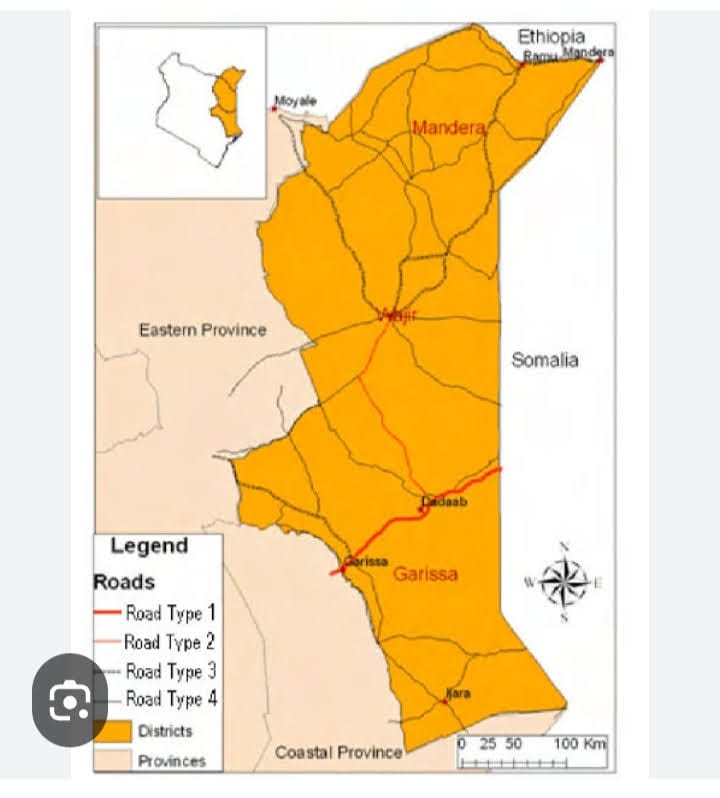
ACK GARISSA MISSIONARY AREA ADMINISTRATION BLOCK